

A data analyst intern helps a team collect, clean, organise and interpret data so the business can answer questions and make better decisions.
You may work with spreadsheets, databases, dashboards and reporting tools while learning how analysts turn raw information into useful insights. The role can vary by employer, but the core work usually involves checking data quality, analysing trends and presenting findings clearly.
What tasks does a data analyst intern usually do?
You will usually support experienced analysts with practical data work.
Common tasks include:
- Cleaning and organising datasets
- Checking data for errors or missing values
- Updating reports and dashboards
- Writing basic SQL queries
- Analysing trends and patterns
- Comparing performance across periods
- Preparing charts or summaries
- Supporting business reporting
- Documenting your analysis
- Presenting findings to team members
You may also spend time learning the company’s systems and understanding where its data comes from.
The work is not only about producing charts. You need to understand what question the business is trying to answer.
How much Excel do you need?
You should be comfortable using Excel because it is still widely used for data cleaning, analysis and reporting.
Useful skills include:
- Sorting and filtering
- Formulas
- IF statements
- XLOOKUP or VLOOKUP
- SUMIF and COUNTIF
- Pivot tables
- Conditional formatting
- Removing duplicates
- Basic charts
You do not need to know every advanced function before applying.
What helps most is being able to take a messy dataset, organise it and produce a useful answer.
Do data analyst interns need SQL?
SQL is one of the most useful technical skills you can learn for data analysis.
It allows you to retrieve information stored in databases rather than relying only on spreadsheets that someone else has prepared for you.
At an entry level, you should understand:
- SELECT
- WHERE
- ORDER BY
- GROUP BY
- COUNT
- SUM
- JOIN
You should also understand the basic idea of tables, rows, columns and relationships between datasets.
If you want to make your application stronger, practise writing queries using sample databases before you apply.
What is Power BI used for?
Power BI helps analysts turn data into dashboards and visual reports.
You may use it to track sales, costs, customer activity, operational performance or other business measures.
Useful Power BI skills include:
- Importing data
- Cleaning data
- Creating relationships
- Building measures
- Designing dashboards
- Filtering reports
- Comparing performance over time
You do not need advanced business intelligence knowledge for most internships.
If you can build a simple dashboard and explain what the information shows, you already have something useful to demonstrate.
Is Tableau useful too?
Tableau is another widely used data visualisation and business intelligence tool.
Some employers use Power BI, while others use Tableau or another reporting platform. You do not need to master both immediately.
Choose one, learn how to work with data properly and understand the principles behind good reporting.
Those skills transfer more easily between tools than memorising where every menu option is located.
Do you need Python?
Python can be useful, especially if the role involves larger datasets, automation or more technical analysis.
Common uses include:
- Cleaning data
- Automating repetitive tasks
- Analysing large datasets
- Working with APIs
- Creating statistical models
- Preparing data for machine learning
Libraries such as pandas are commonly used for data analysis.
Python is not necessary for every entry-level analyst role. If the position focuses mainly on Excel, SQL and dashboards, those tools may deserve your attention first.
What does data cleaning involve?
Data cleaning means fixing or removing problems that could make your analysis inaccurate.
You may need to deal with:
- Missing values
- Duplicate records
- Incorrect dates
- Inconsistent categories
- Typing errors
- Blank fields
- Numbers stored as text
- Unusual values that need investigation
This work can take a large part of an analyst’s time.
If the underlying data is wrong, the final report can also be wrong.
That is why accuracy and attention to detail are important in data roles.
What questions do data analysts answer?
A data analyst helps answer practical business questions using evidence.
For example:
- Which products are selling best?
- Why did customer cancellations increase?
- Which branch is performing strongest?
- How has revenue changed over time?
- Which marketing campaign generated the most leads?
- Where are operating costs increasing?
- Which customer groups behave differently?
Your job is to move from raw data to an answer that someone can use.
This is why business understanding is just as useful as technical skill.
Do you need statistics?
You should understand basic statistics, especially concepts that help you interpret data correctly.
Useful foundations include:
- Mean
- Median
- Percentages
- Ratios
- Distribution
- Correlation
- Basic probability
- Variance
You do not need advanced statistical theory for every internship.
However, you should know enough to avoid making weak conclusions from the data you are analysing.
What is the difference between data analysis and data science?
Data analysis usually focuses on understanding existing data and answering business questions, while data science can involve more advanced statistics, programming and predictive modelling.
As a data analyst intern, you are more likely to spend time working with SQL, spreadsheets, dashboards and reports.
A data science internship may involve Python, machine learning, statistical modelling and larger technical datasets.
There is overlap between the two fields, but the expectations can be different. Read the job description carefully because some employers use the titles loosely.
What soft skills do you need?
You need to communicate clearly because your analysis has little value if nobody understands it.
Useful non-technical skills include:
- Attention to detail
- Problem-solving
- Clear writing
- Presentation skills
- Curiosity
- Time management
- Asking good questions
You should be comfortable explaining your findings to people who are not data specialists.
A manager may not care how complicated your SQL query was. They care about what the result means for the business.
What projects can help you get a data analyst internship?
Build projects that show you can work through the full analysis process.
Good examples include:
- Analysing retail sales data
- Building a Power BI dashboard
- Exploring customer churn
- Comparing business performance over time
- Cleaning a messy public dataset
- Writing SQL queries against a sample database
- Analysing marketing campaign results
- Exploring transport or public-service data
Choose projects where you can explain the question, the data, your method and the conclusion.
A polished portfolio does not need ten projects. Two or three strong examples can be enough to show that you know what you are doing.
What should you put on your CV?
Make your technical skills easy to find.
You can include tools such as:
- Excel
- SQL
- Power BI
- Tableau
- Python
Then support those skills with evidence.
Instead of listing Power BI without context, mention a dashboard you created. Instead of only listing SQL, describe a project where you queried and analysed data.
That gives the employer more confidence that your skills are practical.
What industries hire data analyst interns?
Data analysts are used across many industries because almost every large organisation collects data.
You can find opportunities in:
- Banking
- Insurance
- Retail
- Technology
- Telecommunications
- Consulting
- Healthcare
- Logistics
- Marketing
- Government
- Financial services
The type of data changes, but many of the core analytical skills transfer between industries.
This gives you flexibility when deciding where to apply.
What should you learn before applying?
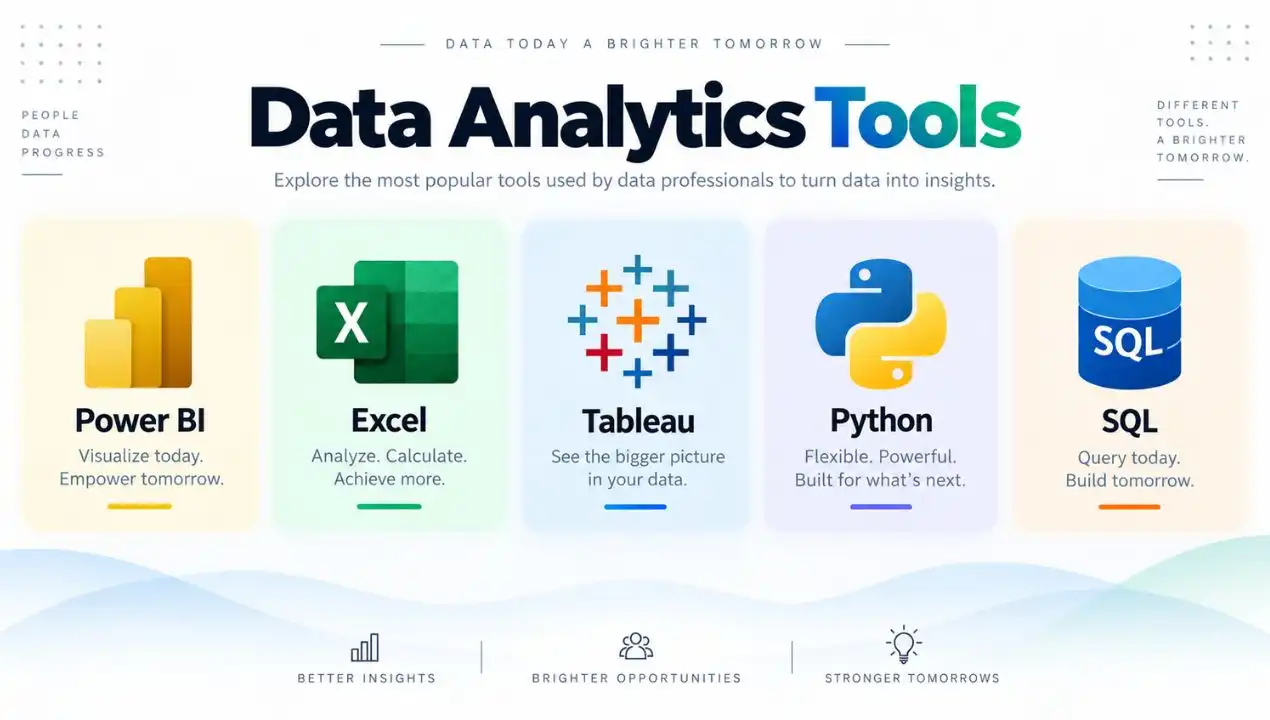
Start with Excel and SQL, then add a reporting tool such as Power BI or Tableau.
Once you are comfortable with those, Python can help you move into more technical analysis. You should also practise explaining your findings in simple language.
The strongest candidates are not only able to manipulate data. They can understand the question, choose the right method and explain what the result means.
If you can combine SQL, spreadsheets, data visualisation and clear business thinking, you will have a solid foundation for your first data analyst role.
